How yo choose the PVC Manufacturer?
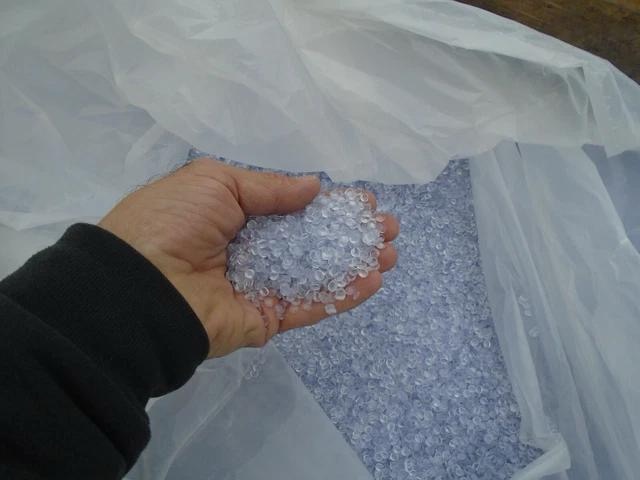
Choosing the right PVC manufacturer depends largely on whether you are sourcing raw material (PVC resin/compounds) for production or finished goods (PVC pipes, profiles, or medical-grade components).
Because PVC performance relies entirely on chemical stability and precise compounding, selecting a manufacturer requires looking past the price tag to evaluate raw material purity, processing stability, and international compliance.
Here is a practical framework to help you evaluate and choose the right partner.
- 1. Material Purity and Compounding Integrity
- 2. Technical Capabilities and Processing Compatibility
- 3. Stringent Quality Control and Lab Testing
- 4. International Regulatory Compliance
- 5. Supply Chain and Export Logistics Reliability
- BSA Helping you One-Stop Sourcing from CHINA: Inspect Suppliers→Get Quotation→Place Orders → Follow up→Arrange Logistic
1. Material Purity and Compounding Integrity
The biggest differentiator in PVC manufacturing is how the compound is formulated. Poorly formulated PVC leads to brittle products that crack under stress or degrade quickly in sunlight.
-
Virgin Resin vs. Recycled Content: Always clarify the percentage of virgin PVC resin used. High-quality, high-pressure applications require 100% virgin resin to ensure structural integrity and batch-to-batch consistency.
-
Additive Balance: Ask about their stabilizer package. For instance, high-quality manufacturers are shifting toward eco-friendly Calcium-Zinc (Ca-Zn) or organotin stabilizers rather than cheaper, toxic lead stabilizers.
-
Filler Ratios: Some manufacturers over-saturate their mixtures with cheap fillers like calcium carbonate to cut costs. While fillers add hardness, too much makes the final PVC brittle. Ask for the technical data sheet (TDS) to verify the ash content and polymer purity.
2. Technical Capabilities and Processing Compatibility
A great manufacturer doesn’t just sell off-the-shelf products; they ensure the material matches your specific processing machinery or environmental demands.
-
K-Value Precision: If you are buying resin, the K-value (which measures molecular weight and viscosity) must be exact for your process. For example, a K-value of 65–67 is standard for rigid pipes, while lower K-values are used for injection molding.
-
Extrusion and Molding Support: The manufacturer should be able to adjust the melt flow index (MFI) and thermal stability of the compound to match your specific extrusion lines or injection molding cycle times.
-
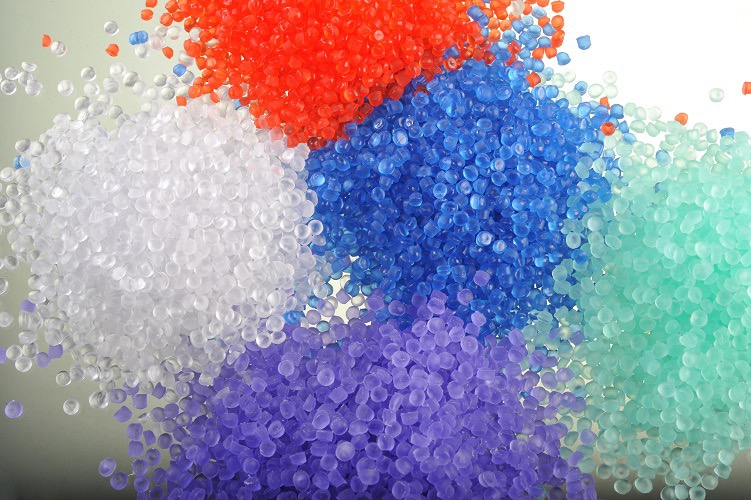
Customization Options: Check if they can supply tailored variations, such as enhanced UV resistance (via titanium dioxide additives) for outdoor infrastructure, impact modifiers for cold climates, or specific flame-retardant properties.
3. Stringent Quality Control and Lab Testing
Do not take a supplier’s word for quality. A reliable manufacturer must have an in-house laboratory capable of executing both batch tests and destructive testing. Ask if they routinely perform the following:
| Test Type | What It Proves | Why It Matters |
| Hydrostatic / Burst Pressure | Maximum pressure capacity | Prevents catastrophic failures in piping systems. |
| Heat Reversion / Softening Point | Dimensional stability under heat | Ensures the PVC maintains its shape across its rated temperature range (ideally withstanding 80°C to 90°C during processing). |
| Impact & Tensile Strength | Resistance to cracking and pulling | Standard benchmarks (like achieving a tensile strength above 40 MPa) prove the material won’t shatter if dropped or stressed. |
4. International Regulatory Compliance
PVC chemistry is heavily regulated globally. If your final product is destined for export or high-stakes industries, compliance is non-negotiable. Ensure the manufacturer holds and can actively prove the following certifications:
-
ISO 9001: The baseline standard for consistent manufacturing quality management.
-
RoHS and REACH: Critical for European and global markets to ensure the PVC is free from hazardous heavy metals and restricted plasticizers (like harmful phthalates).
-
NSF/ANSI 61 (or regional equivalent): Absolute requirement if the PVC will be used for potable (drinking) water systems or medical-grade applications to guarantee zero toxic leaching.
5. Supply Chain and Export Logistics Reliability
A manufacturing line shutdown due to delayed raw materials is incredibly costly. Evaluate the supplier’s operational footprint:
-
Production Scale: Do they have the capacity to scale production if your order volume doubles, or will you hit a bottleneck?
-
Lead Times and Logistics: An experienced exporter should provide transparent lead times and possess a dedicated logistics team familiar with international shipping documentation, customs clearance protocols, and multi-country supply chains.
Pro Tip for Auditing: Before signing a long-term contract, always request a sample batch to run through your own quality control and testing machinery. If possible, send a quality manager to perform a 1-to-2-day factory audit to inspect their raw material mixing control, extrusion consistency, and how they handle scrap material.